



Overview of BD Rahpsody Technology…
FAQ
What Is BD Rhapsody?
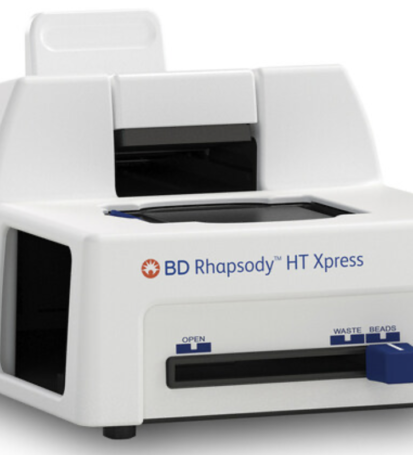
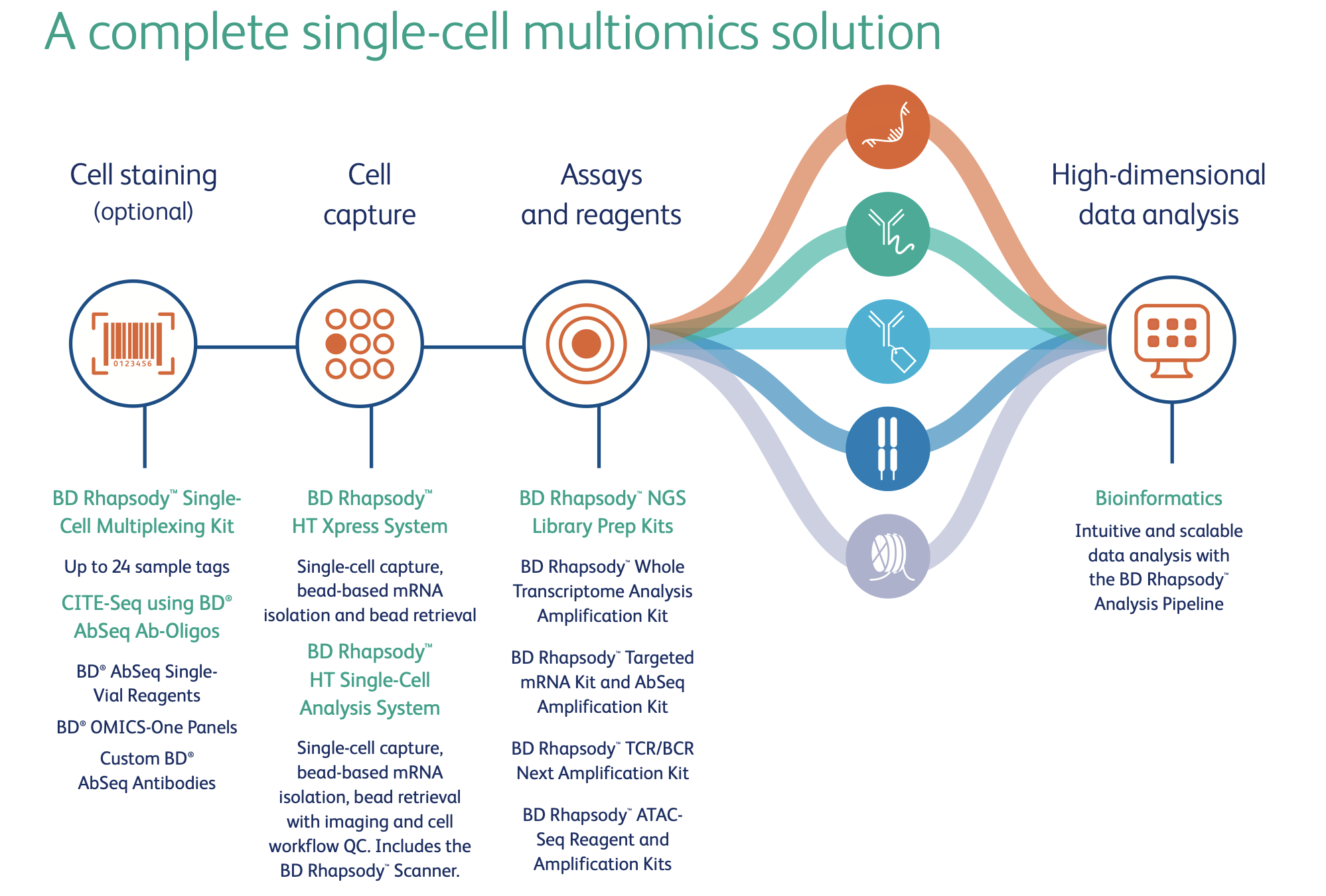
The BD Rhapsody™ HT Xpress System employs a micro-well based single-cell partitioning technology to facilitate detailed single-cell analysis. This system can barcode and capture over 640,000 single cells per cartridge, enabling studies involving millions of cells. The BD Rhapsody™ HT Xpress introduces a versatile cartridge design that accommodates up to eight times the number of lanes simultaneously, supporting a wide range of cell inputs from 100 to 800,000 cells per cartridge.
What Does End-To-End Service Through The GRCF Mean?
After consultation with our Single Genomics team, customers can drop off a single cell suspension of cells they would like captured. We work to establish an agreed upon capture rate, perform the capture, sequencing libraries, quality libraries are sequenced and data returned after first pass analysis on the platform proprietary software. Our goal is to make the process from cells to usable data as seamless as possible to the researcher.
How do I get a consultation appointment to get started with single cell?
To set up an appointment for single cell consultation, e-mail, Emanuele Palescandolo, [email protected].
Following a consultation with our Single Genomics team, customers can submit a single cell or nucleus suspension for capture. We collaborate with you to determine an agreed capture rate, then execute the capture and sequencing of libraries. Quality libraries are sequenced, and data are provided after an initial analysis using the platform’s proprietary software. Our aim is to ensure a seamless transition from cells to usable data for researchers.
How do I determine the price of an experiment?
During your consultation with Emanuele Palescandolo, pricing will be discussed once it is decided how to proceed with your experiment.
Should I Use Single Cells Or Nuclei For My Experiment?
Nuclei are often used when isolating live cells is challenging or when the tissue is frozen. Cells that are too large for the microfluidics channels of the 10x Chromium system, present a challenging shape or are not easily dissociated from tissue, would be more suitable for nuclei isolation. The team will discuss the available options during the consultation phase.
What Do I Need To Consider in Preparing Cells?
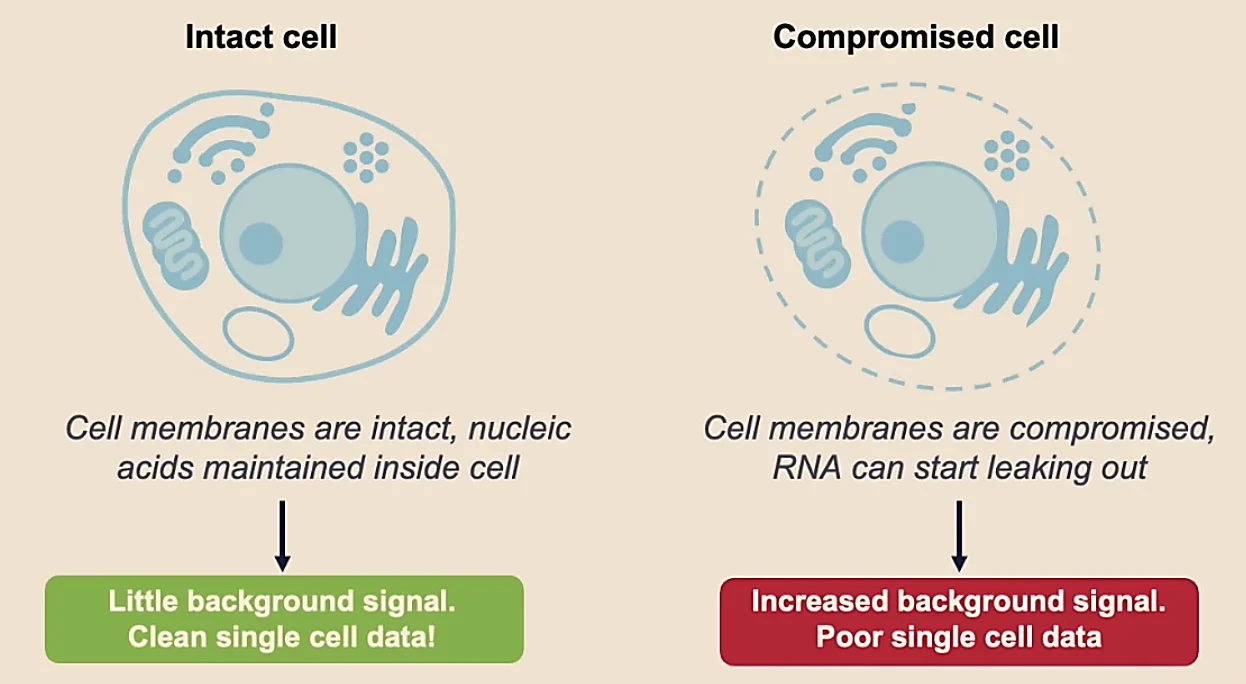
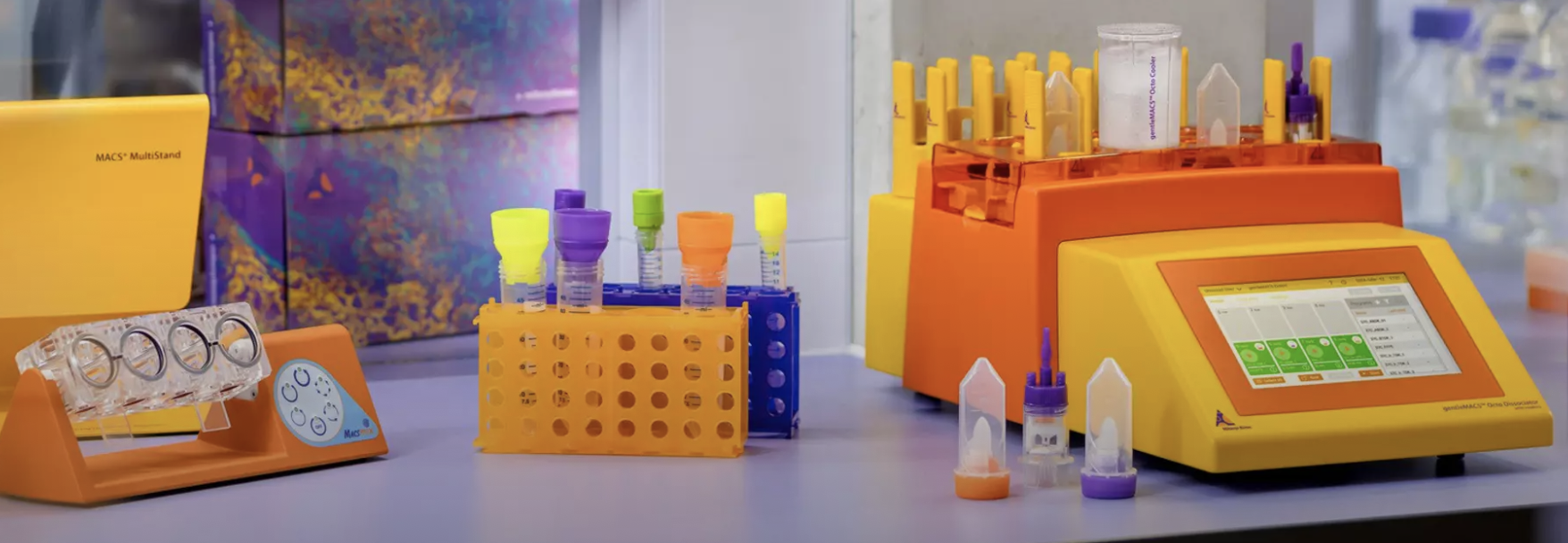
Isolating single cells from tissue presents significant challenges, primarily due to the need to maintain cell viability and prevent clumping. Aggressive dissociation methods can damage cells or lead to their aggregation (for example due to release of chromatin), complicating downstream analyses. Ensuring that individual, live cells are obtained is essential for accurate study of cellular functions and interactions. Ideally, >80-90% viable cells in your prep allow for low-background, high-quality data. Below 70% we discourage further processing. We offer automated cells or nuclei isolation with Milteny GentleMaCS Octo Dissociator (8-sample, low temperature to 37 °C) and dead cells and debris purification with the Levitas LC1.
What makes a good quality single cell sample?
Clean
Healthy
Intact
Sample Preparation
Single Cell Isolation with Levitas
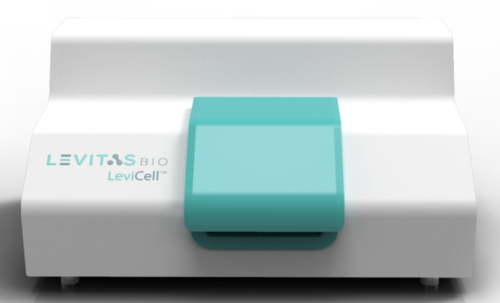
The Levitas LC1 (LeviCell® 1.0) redefines single-cell isolation by utilizing a sophisticated, non-invasive approach to sample preparation. Unlike traditional methods that rely on high-pressure fluidics or harsh labeling, the LC1 uses Levitation Technology to separate cells based on their physical properties.
Single Cell Isolation with Miltenyi
The Miltenyi Biotec MACS® (Magnetic-Activated Cell Sorting) system is for isolating high-quality single cells with speed and precision. By leveraging a combination of proprietary magnetic bead technology and gentle fluidics, it ensures that your downstream assays—from NGS to cell culture—begin with a pure, viable, and representative population.
Single Cell Genomics through the IGC is a joint effort between the Cell Center & the Single Cell, Spatial, and Functional Genomics Laboratories.
Following a consultation with our Single Genomics team, customers can submit a single cell or nucleus suspension for capture. We collaborate with you to determine an agreed capture rate, then execute the capture and sequencing of libraries. Quality libraries are sequenced, and data are provided after an initial analysis using the platform’s proprietary software. Our aim is to ensure a seamless transition from cells to usable data for researchers.